

How Chefs Create Deep Flavor Without Heavy Oils in Brick Lane Indian Restaurants
Chefs at Brick Lane Indian restaurants create deep flavour without heavy oil by moving the work elsewhere: dry-roasting whole spices, browning onions slowly with splashes of water, using the tandoor’s dry heat, cooking tomato down until it caramelises, and finishing with acidity and a small, very hot tempering. Oil becomes a tool, not a sauce.
Most people picture a curry with a slick of orange oil on top. Some of that is technique. A lot of it is habit. We cook with far less than people expect, and none of what replaces it is secret.
Why do Indian kitchens use so much oil in the first place?
Fat does three real jobs in Indian cooking. First, many of the most important aroma compounds in spices, such as those in cumin, cardamom and chilli, dissolve in fat far better than in water, so fat carries flavour around the dish. Second, hot fat transfers heat efficiently, which lets onions and spices brown. Third, in a bhuna-style dish, oil separating from the masala at the edges of the pan is the cook’s visual signal that the water has cooked off and the spices are properly fried.
Then there are the less useful reasons: extra oil keeps reheated sauces glossy and stops them catching. That’s convenience, not flavour.
So the question isn’t “how do you remove oil?” It’s “how do you do each of those three jobs with less of it?”
Where does depth come from if not from fat?
Depth comes mostly from browning, toasting, reduction and contrast.
| Technique | What it replaces | What it adds
|
|---|---|---|
| Dry-roasting whole spices | Long frying of spices in oil | Nutty, toasted notes from browning reactions |
| Steam-frying onions with water | Deep-frying or shallow-frying onions | Sweetness and colour through slow caramelisation |
| Cooking tomato purée until it darkens | Oil-rich tomato gravy | Concentrated savoury depth |
| Tandoor or grill heat | Pan-frying vegetables and meat | Char, smoke and concentrated sugars |
| A small, very hot tadka at the end | Large amounts of oil cooked in from the start | Bright, fresh aroma on the surface of the dish |
| Souring agents (tamarind, lemon, amchur) | Richness from fat | Lift and contrast, so the dish doesn’t taste flat |
Two of these deserve more detail.
Dry-roasting. Put whole cumin, coriander seed and dried red chilli in a dry pan over medium heat and keep them moving for 60 to 90 seconds. They darken a shade and smell toasty. That’s the Maillard reaction and some light caramelisation at work, building new flavour compounds that weren’t in the raw seed. Grind them while warm. You now have more flavour from those spices than an extra two tablespoons of oil would have given you.
Steam-frying onions. Start sliced onions in a tablespoon of oil over medium heat. When they begin to stick and brown on the base, add two tablespoons of water and scrape. The water lifts the browned layer (the fond) back into the onions, and then evaporates. Repeat for 15 to 20 minutes. You get deep golden, jammy onions using a fraction of the fat.
How does the tandoor help?
A tandoor is one of the oldest low-oil cooking tools there is. The clay walls hold intense heat, often 400°C or more, and food cooks by radiant heat and hot air rather than by sitting in fat. Marinades with yoghurt or spice paste char quickly, giving smoke and bitterness that read as “richness” on the palate.
In our kitchen we put vegetables in the tandoor as well as meat. Cauliflower, peppers, onions and mushrooms all come out with blistered edges and a concentrated sweetness that would need a lot of oil to replicate in a pan. Those charred vegetables can then go into a curry as the flavour base, so the sauce gets its depth from the grill rather than from fat.
Recipe: a low-oil aubergine and chickpea bhuna (serves 4)
A bhuna doesn’t need a pool of oil. Total oil here: one tablespoon for the pan plus one teaspoon for the tadka.
You’ll need: 1 large aubergine (about 400g) cut into 2cm cubes; 1 tbsp plus 1 tsp rapeseed oil; 2 medium onions, finely sliced; 4 garlic cloves and a 3cm piece of ginger, grated; 1 green chilli, slit; 1 tsp cumin seeds and 2 tsp coriander seeds, dry-roasted and ground; 1/2 tsp turmeric; 1 tsp Kashmiri chilli powder; 2 tbsp tomato purée; 1 x 400g tin chickpeas, drained; about 250ml water; 1 tsp salt; 1/2 tsp garam masala; juice of half a lemon; a handful of chopped coriander. For the tadka: 1/2 tsp black mustard seeds and 1 dried red chilli.
- Roast the aubergine dry. Spread the cubes on a lined tray and roast at 220°C (200°C fan) for 20 to 25 minutes, turning once, until browned and soft. Aubergine flesh is full of tiny air pockets that soak up oil like a sponge; roasting collapses them first, so it won’t drink fat later.
- Steam-fry the onions. Heat 1 tbsp oil in a wide pan over medium heat. Add the onions with a pinch of salt (it draws out water and speeds softening). Cook for 15 to 20 minutes, adding a splash of water whenever they stick, until deep golden.
- Add aromatics. Stir in garlic, ginger and green chilli for 2 minutes until the raw smell fades.
- Fry the spices. Add the ground roasted spices, turmeric and Kashmiri chilli with 2 tbsp water. Stir for 1 to 2 minutes. The water stops the powder scorching in such a small amount of fat.
- Darken the tomato. Add the tomato purée and cook, stirring, for 3 to 4 minutes until it turns a shade darker and starts to stick. This is your depth.
- Build the bhuna. Add the aubergine, chickpeas, salt and about 150ml water. Simmer 10 minutes, stirring and crushing a few chickpeas to thicken. Add more water only if it catches. You want it thick and clinging.
- Finish. Stir in garam masala and lemon juice. Taste and adjust salt.
- Tadka. Heat 1 tsp oil in a small pan until it shimmers. Add mustard seeds and the dried chilli. When the seeds pop (about 20 seconds), pour over the curry. Scatter with coriander.
How does this shape a vegan Indian restaurant London diners trust?
Cooking with less fat and cooking vegan are closely linked. Remove ghee, cream and butter and you lose a lot of easy richness, so the techniques above stop being optional. They become the whole method.
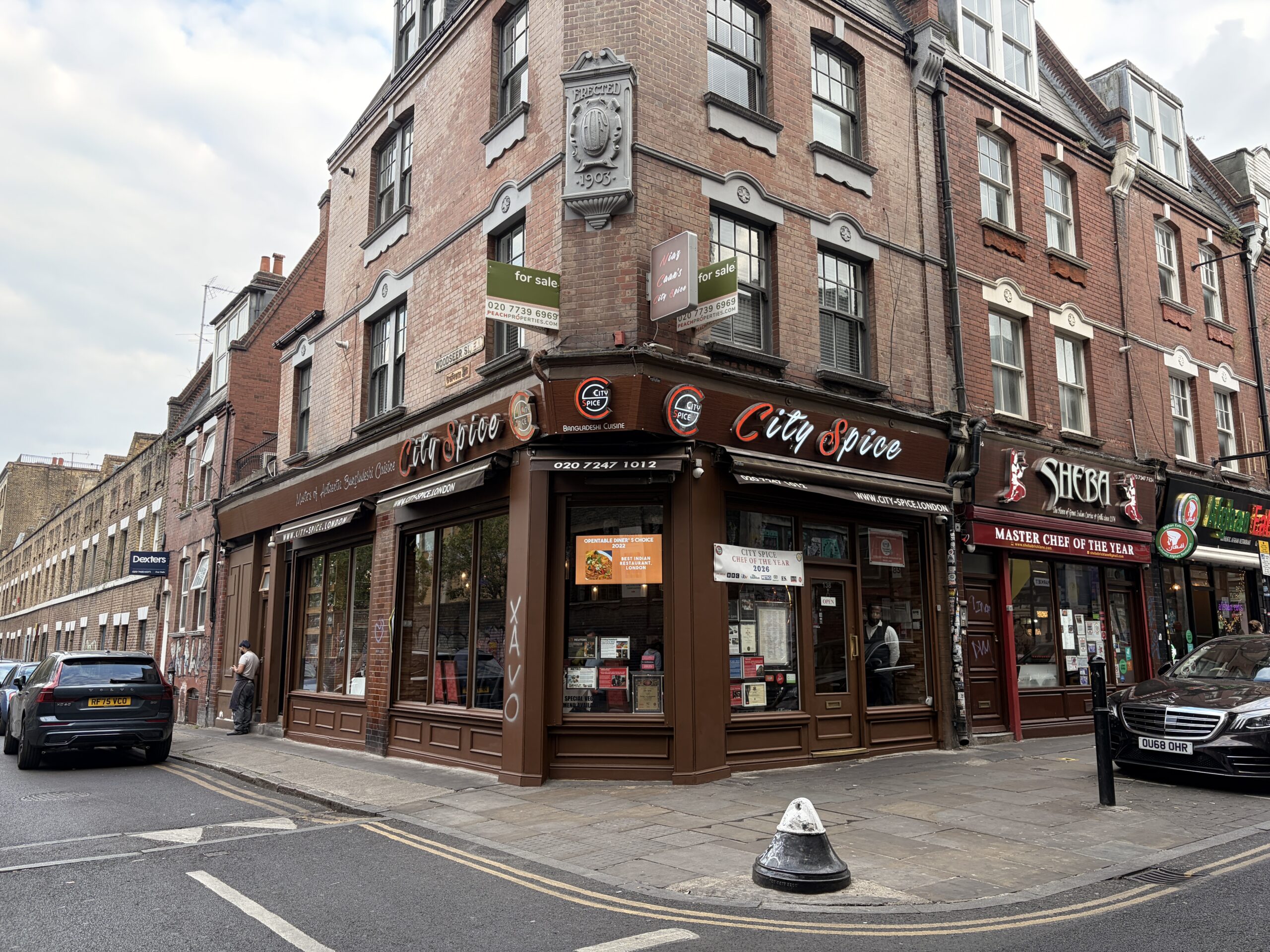
That thinking sits behind the dedicated vegan curry menu at City Spice, which Chef Niaz developed with Michelin-inspired chef Rupert Rowley. It includes Chowle Achar, an aubergine dhal, Shobji Kufta Bhujon and the thali-style Shahi Sahakari platter. The point was never to make a lighter imitation of a meat menu. It was to build dishes that get their depth from roasting, tempering and contrast, which is exactly what a good vegan Indian restaurant London diners come back to should be doing. For anyone who simply wants a London vegan restaurant that cooks with spice and confidence, that’s the bar we set ourselves.
What should diners look for at Brick Lane Indian restaurants?
A few quick checks tell you a lot:
- Look at the edge of the bowl. A thin ring of oil on a bhuna is normal and shows proper frying. A layer you could spoon off isn’t.
- Taste for brightness. Dishes with lemon, tamarind or a fresh tadka feel lighter even when they’re rich.
- Ask about the tandoor. Kitchens that cook vegetables in it, as we do, usually rely less on the frying pan.
Key Takeaways
- Fat carries aroma, transfers heat and signals a finished bhuna; each job can be done with far less of it.
- Dry-roasting spices, steam-frying onions and darkening tomato purée build most of a curry’s depth.
- The tandoor gives char and smoke without frying, for vegetables as well as meat.
- A small, very hot tadka and a sour finish make a low-oil dish taste complete.
- The best Brick Lane Indian restaurants treat oil as a tool, not a sauce.
Frequently Asked Questions
Does less oil mean less flavour in a curry?
Not if the technique changes. Dry-roasting spices, slow browning of onions and a final hot tempering put flavour back in, often more cleanly than extra oil would.
Why does oil separate on top of a curry?
When the water in a masala evaporates, the oil that was emulsified in it separates out and pools at the edges. In bhuna-style cooking this is the sign the spices are properly fried, but only a thin ring is needed.
Why does aubergine soak up so much oil?
Aubergine flesh is full of small air pockets that fill with oil as soon as it hits the pan. Roasting, grilling or salting it first collapses those pockets, so it absorbs much less.
Does City Spice offer vegan dishes?
Yes. City Spice on Brick Lane has a dedicated vegan curry menu created by Chef Niaz with Rupert Rowley, including an aubergine dhal and the thali-style Shahi Sahakari platter.
Final Thoughts
Deep flavour has never really depended on oil. It depends on patience, heat control and balance, all of which a home cook can borrow. That’s the approach we take at City Spice, and it’s one of the quieter ways Brick Lane Indian restaurants have moved on from the old stereotype of a greasy curry. If you’d like to taste the difference, come and see us at 138 Brick Lane and ask the team how any dish is built.