

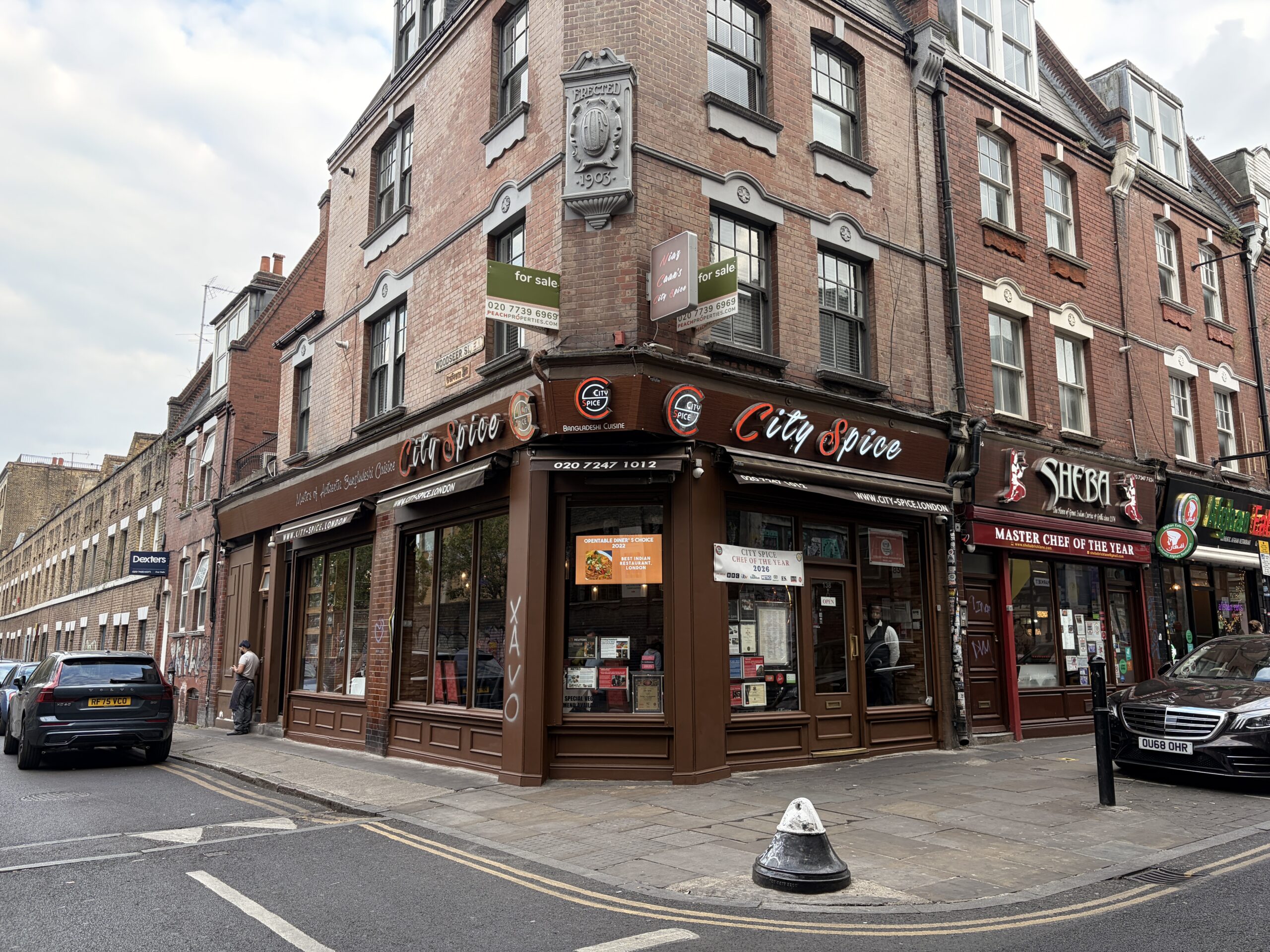
Sizzling Tandoor Grills Featured Across Brick Lane Indian Restaurants
The sizzling grills at Brick Lane Indian restaurants depend on fire management more than recipes. A good tandoor cook builds the heat early, knows which part of the oven suits each skewer, pulls grills out to rest and baste, and sends them out on a hot iron plate so they arrive still crackling. Timing is the whole craft.
Most guides tell you what to order from the tandoor. This one is about what happens behind the counter on a Friday night.
What happens before the first skewer goes in?
The tandoor is a clay pot, usually set into an insulated casing, with a charcoal fire at the bottom. Clay heats slowly and holds heat for a long time, so the fire has to be lit well before service. A cold tandoor gives you grey, steamed meat. A properly heated one gives you char.
Our routine looks like this:
- Light the charcoal early and let it burn down until the coals glow without big flames. Flames mean soot; glowing coals mean clean, steady heat.
- Let the walls soak up heat. The clay needs time before it can radiate evenly. If you rush this, the first orders cook unevenly and naan will not stick to the wall.
- Test with bread. A slapped naan that puffs and blisters within a couple of minutes tells us the walls are ready.
- Feed the fire through service. A few coals added at a time keep the temperature steady instead of letting it crash and spike.
The air near the coals can run well above 400°C. We read it from the colour of the coals and how fast bread blisters, not a thermometer.
Why does a tandoor grill taste different from a barbecue?
On a barbecue, food lies flat above the heat and cooks mostly from one side at a time. In a tandoor, the skewer hangs vertically, and three kinds of heat work together.
- Radiant heat from the glowing clay walls browns the surface from every side.
- Hot air rising from the coals moves around the meat, cooking it evenly.
- Conducted heat travels along the steel skewer into the centre of the meat, so thick pieces cook from the inside out as well as the outside in.
Then there is the drip. Marinade and fat fall onto the coals, vaporise and rise back over the food as fragrant smoke. That is a big part of what people call the tandoori flavour, and it is why a grill pan at home, however hot, never quite gets there.
How do we time different grills?
Different foods want different positions and different times. Below is a rough guide from our side of the counter. Treat them as ranges, not rules; size and oven heat change everything.
| Grill | Where on the skewer, where in the oven | Approximate time | What we watch for
|
|---|---|---|---|
| Fish tikka (firm white fish) | Spaced apart, away from the hottest zone | 6–8 minutes | Opaque all through, edges just coloured |
| Paneer tikka | With peppers and onion between cubes | 4–6 minutes | Golden spots before the cheese softens too far |
| Seekh kebab | Pressed tightly onto wide skewers | 8–10 minutes | Firm to the touch, juices running clear |
| Chicken tikka (boneless) | Pieces touching lightly | 10–12 minutes | Charred tips, still juicy when cut |
| Lamb chops | Bone-in, fat edge outward | 8–12 minutes | Fat rendered and crisp, centre still blushing |
| Chicken on the bone | Slashed to the bone, deeper in the oven | 15–20 minutes | Clear juices at the thickest point |
| Vegetables (cauliflower, peppers, onion) | Chunky pieces | 5–10 minutes | Blistered skin, a little bite left |
Seekh kebab is the one that tests a grill cook. The minced lamb has to be cold and well kneaded so the proteins bind; warm mince slides off the skewer and into the fire.
Why do skewers come out halfway through?
This is the step diners never see, and it matters more than anything else.
Most grills are pulled out part way, hung to rest for a few minutes, basted with butter or oil, then returned to finish. Three things happen in that pause:
- Carryover cooking. The centre keeps cooking from stored heat while the surface takes a break, so the outside does not burn before the middle is done.
- The baste. Fat on the surface helps the final blast of heat brown and crisp the outside, and carries fat-soluble spice flavour.
- Moisture balance. Resting lets juices settle back into the fibres instead of running out the moment you cut in.
Skip the rest and you get the classic failure: blackened outside, dry or undercooked inside. If you have ever had a chicken tikka that was somehow both burnt and chewy, this is usually why.
What makes the sizzle at the table?
The sizzle is real heat, not just a bit of show. A heavy cast-iron plate goes on a burner while the grill finishes, and gets very hot. Sliced onions go down first. They stop the meat sticking, and they start to caramelise against the iron. The grills go on top, and a squeeze of lemon or a little butter hits the metal on the way out.
That burst of steam carries the smell of charred onion across the room, and the iron keeps the food hot for the length of a conversation. Eat the onions; they have soaked up the juices and are some of the best bites on the plate.
At City Spice, we also use the tandoor for vegetables as well as meat, so the same char and smoke reach plant-based dishes. Our dedicated vegan curry menu, created by Chef Niaz with Michelin-inspired chef Rupert Rowley, sits well alongside a plate of blistered vegetables from the clay oven.
How do Brick Lane Indian restaurants fit grills into a meal?
Grills usually arrive first, which is right: they are at their best in the first few minutes. A few tips from people who eat this way after every shift:
- Order grills to share as a starter, then move on to curries. Do not leave them waiting while mains arrive.
- Use the chutneys. A sharp green chutney of mint and coriander, or a squeeze of lemon, wakes up smoky meat.
- Pair a dry grill with a sauced dish. Charred chicken or lamb with a slow-cooked curry and dhal gives you contrast in every mouthful.
- Ask about spice levels. Tandoori marinades vary, and a good Indian restaurant Brick Lane kitchen will happily tell you how much heat to expect.
Chef Niaz’s cooking carries a Bengali twist, so alongside our grills you will find curries built on Bengali techniques, such as whole spices tempered in hot oil and a gentle sour note. We think that pairing of tandoor char with a carefully built sauce is what people are really hunting for when they search for the best curry in London.
How can you tell a well-run tandoor from the table?
- Char on the edges, but no bitter, burnt spice taste.
- Meat that is juicy right to the centre.
- Naan that is blistered and smoky on top, soft but not doughy inside.
- Vegetables with colour and bite, not limp and wet.
- A sizzler that is still crackling when it lands.
Frequently Asked Questions
How hot does a tandoor get?
The air near the charcoal in a tandoor can run well above 400°C, far hotter than a home oven. That intense heat chars the outside of meat, vegetables and bread quickly while keeping the inside moist.
Why is tandoori food cooked on long skewers?
Long steel skewers let the food hang vertically in the oven, close to the hot clay walls. The metal also conducts heat into the centre of each piece, helping thick cuts cook evenly.
What is the difference between a tandoori grill and a sizzler?
A tandoori grill describes how the food is cooked, in the clay oven. A sizzler describes how it is served, on a very hot cast-iron plate over onions so it arrives crackling.
Can vegetables be cooked in a tandoor?
Yes. Cauliflower, peppers, onions and paneer all take on excellent char and smoke in the tandoor. At City Spice we use ours for vegetables as well as meat.
Why is my tandoori chicken dry?
Dry tandoori chicken usually means it was cooked too long without resting or basting, or the oven was not hot enough so it cooked slowly. A properly hot tandoor and a mid-cook rest keep it juicy.
Final Thoughts
Behind every crackling plate at Brick Lane Indian restaurants is someone who lit the fire early, watched the coals all night and pulled each skewer at the right moment. That care is what we bring to our tandoor at City Spice on Brick Lane. Come in, order a few grills to share while they are still sizzling, and follow them with one of Chef Niaz’s Bengali-twist curries.