
Signature House Curries to Try at an Indian Restaurant in Brick Lane
The house curries most worth trying at an Indian restaurant in Brick Lane are the British Bangladeshi classics (jalfrezi, dopiaza, pathia, dhansak) alongside Bengali dishes such as a shatkora curry or a mustard-oil fish curry, plus a proper vegan curry. Together they show both the street’s restaurant tradition and the home cooking behind it.
“House curry” means something specific on Brick Lane. It is the family of dishes that Bangladeshi-run restaurants built for British diners over decades, some adapted from Indian regional food, some invented here. Knowing their stories makes ordering far more interesting.
Where did Brick Lane’s house curries come from?
Most of the families who run Brick Lane’s restaurants trace their roots to Sylhet, in north-east Bangladesh. Many Sylheti men worked as cooks and seamen on British ships, and some settled in East London. By the 1970s and 1980s, the area around Brick Lane had become the heart of London’s Bangladeshi community, and restaurants followed.
These cooks did not simply recreate home food. They took dishes British diners already knew from earlier Indian restaurants, and a menu format of named sauces at graded heat levels became the standard across Britain. Behind the kitchen doors, though, families kept cooking Bengali food for themselves: fish, greens, lentils, mustard and citrus.
The best Brick Lane restaurants today serve both. The curry house menu is still there, but the Bengali side is increasingly on the front page rather than hidden.
Which classic house curries should you know?
Here are the ones that appear on almost every menu, and what each should taste like when it is done well.
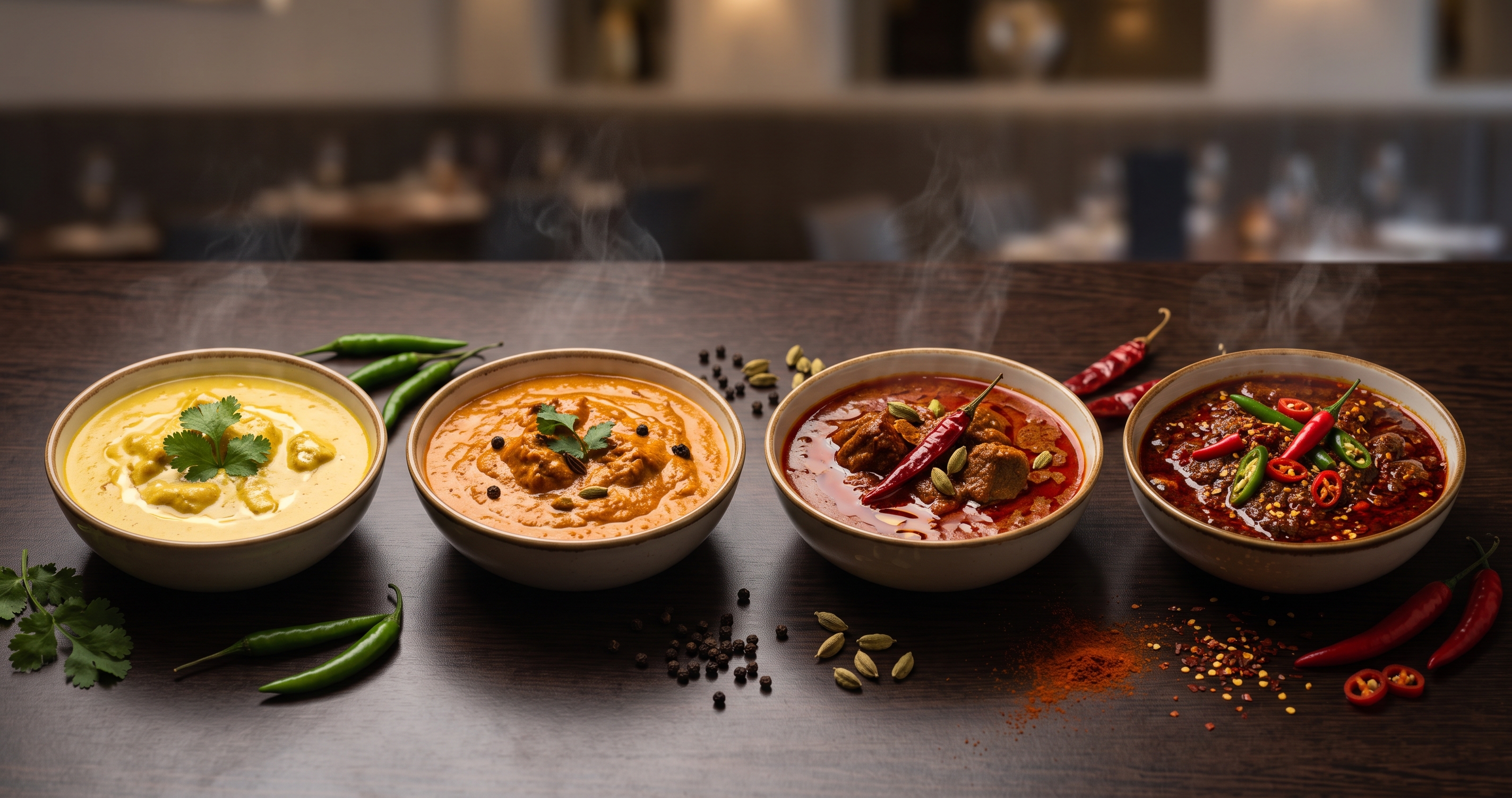
| Curry | Character | Typical heat | What to look for
|
|---|---|---|---|
| Jalfrezi | Stir-fried peppers, onions, fresh green chilli | Medium to hot | Vegetables with bite, not stewed |
| Dopiaza | Onions twice: cooked in, then added in chunks | Medium | Sweetness from soft onions, crunch from the late ones |
| Pathia | Sweet, sour and hot together | Medium to hot | Tangy, glossy sauce with a sugar note |
| Dhansak | Meat cooked with lentils, sweet-sour | Medium to hot | Thick, earthy, slightly sour |
| Rogan josh | Tomato and paprika-red, aromatic | Medium | Deep colour, warm spices, no harsh chilli |
| Korma | Creamy, nutty, mild | Mild | Delicate spice, not just sweet |
Jalfrezi comes from a word meaning “hot-fry”. It was originally a way of reheating leftover meat with chillies and vegetables, often linked to kitchens in colonial-era India. A good one is cooked fast at the end so the peppers stay crisp.
Dopiaza literally means “two onions”. The first batch is cooked down into the sauce for sweetness; the second is added later in large petals so it keeps texture.
Dhansak is a Parsi dish from western India, originally made with several lentils and vegetables cooked with meat. Restaurant versions in Britain are usually hotter and sharper than the Parsi original.
Pathia has roots in Parsi cooking too, where sweet-sour-hot sauces are common. In British curry houses it became its own fixture, usually with tomato, tamarind or lemon and a little sugar or jaggery.
What about chicken tikka masala?
It is the most ordered curry in Britain, and its origin is genuinely disputed. The most famous claim comes from a restaurant in Glasgow in the 1970s, where a chef is said to have added a tomato-based sauce to chicken tikka for a customer who wanted something with gravy. Others say similar dishes existed earlier in Indian and British Indian kitchens. Nobody can prove it either way.
What is not disputed: a good one starts with properly charred tandoor chicken. If the chicken tastes poached, it was never in the tandoor. At City Spice we use the tandoor for vegetables as well as meat, so the same char you get on a tikka also turns up on our paneer and vegetables.
Which Bengali curries make an Indian restaurant in Brick Lane stand out?
This is where a kitchen on the street can show something you will not easily find elsewhere.
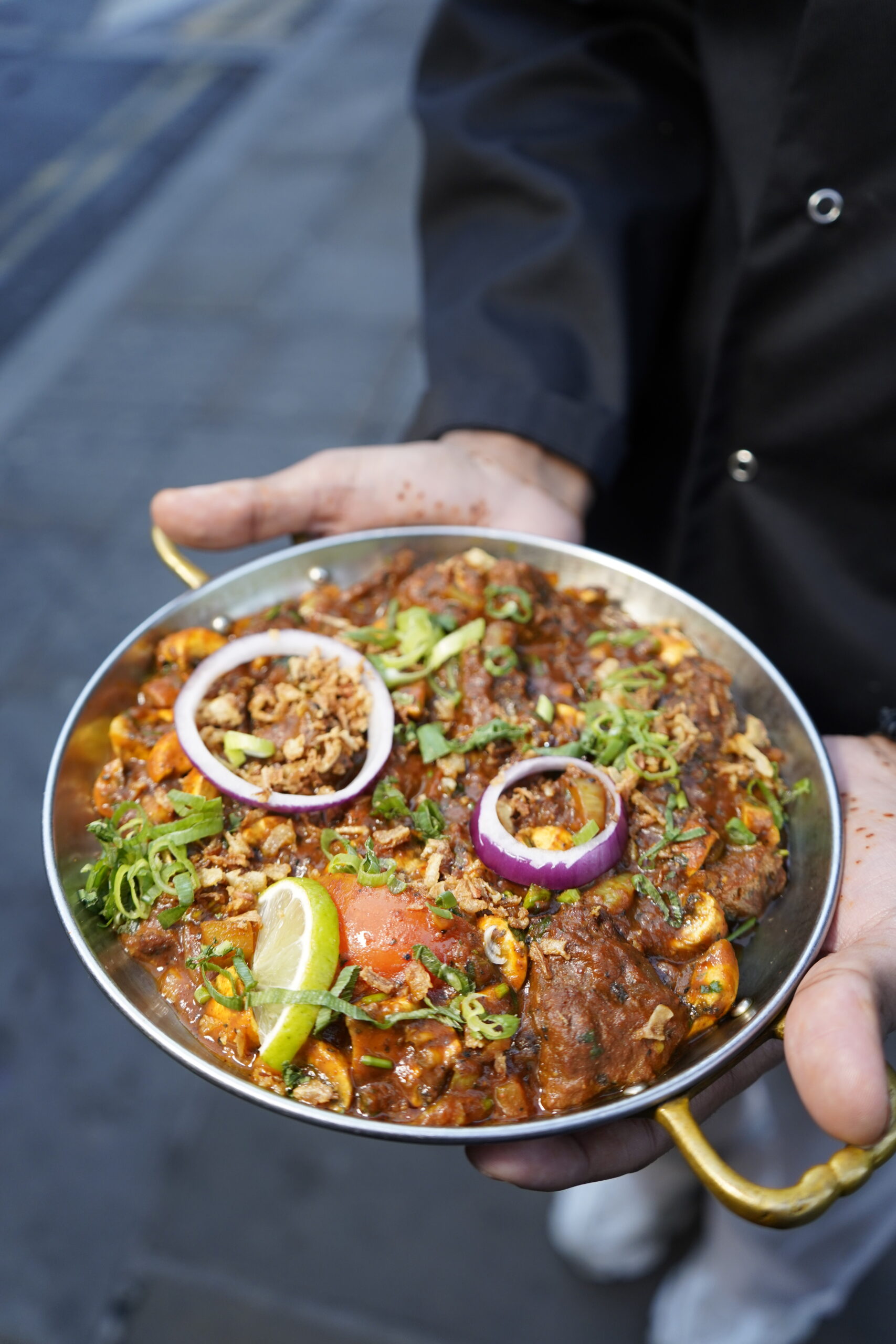
Shatkora curry. Shatkora is a thick-skinned citrus fruit from Sylhet. Cooks cut the rind into small pieces and simmer it with beef or lamb. It gives a bitter, perfumed, lime-like sharpness unlike anything else in Indian cooking. If you see it on a menu, order it.
Mustard fish curry. Fish rubbed with turmeric, lightly fried, then simmered in a sauce of ground mustard seed and green chilli, usually with mustard oil. It is pungent, bright and lighter than most restaurant curries.
Bengali dhal. Thinner and soupier than many North Indian versions, often made with red lentils and finished with a tarka of panch phoron and dried chilli in mustard oil. It is everyday food in Bengali homes and the simplest way to taste the region’s flavours.
Chef Niaz’s cooking carries a Bengali twist, so these flavours (mustard, citrus, panch phoron, fresh green chilli) run through our menu even in familiar dishes.
Can vegans have a signature house curry too?
Yes, and they should not have to settle for a vegetable korma with the cream left out.
At City Spice, Michelin-inspired chef Rupert Rowley worked with Chef Niaz to create a dedicated vegan curry menu. It has its own signature dishes: Chowle Achar, an aubergine dhal, Shobji Kufta Bhujon and the Shahi Sahakari platter, which is served thali-style. The platter is the best place to start because it lets you try several dishes on one tray.
Vegan Bengali cooking has a long history of its own. Many traditional Bengali vegetable dishes are cooked in mustard oil with no dairy at all, so the ideas behind a good vegan curry are older than the word “vegan”.
How do you order house curries for a table?
A simple rule from our floor team: one classic, one Bengali, one vegetable or lentil, and one from the tandoor.
- Pick one classic you already like, such as a jalfrezi or dopiaza, as a reference point.
- Add one Bengali dish you have never tried, like a shatkora or mustard fish curry.
- Add a dhal or vegetable curry to balance the richer dishes.
- Add something from the tandoor for smoke and texture.
- Share rice and bread and ask the team to bring everything together.
Tell the team your heat tolerance honestly. Most house curries can be made milder or hotter without losing their character.
Frequently Asked Questions
What is the most popular curry on Brick Lane?
Classics like chicken tikka masala, jalfrezi and korma are widely ordered. Many regulars, though, go for Bengali dishes such as fish curries or shatkora curries.
What is shatkora?
Shatkora is a citrus fruit from the Sylhet region of Bangladesh. Its rind is cooked into meat curries for a bitter, aromatic, lime-like sourness.
Is jalfrezi hotter than madras?
They are often similar, but jalfrezi’s heat comes mainly from fresh green chillies, while madras relies more on dried chilli powder. Restaurants vary, so ask.
Are Brick Lane restaurants Indian or Bangladeshi?
Most Brick Lane restaurants are run by families of Bangladeshi, mainly Sylheti, heritage. They serve a mix of curry house classics and Bengali home-style dishes under the “Indian restaurant” name.
Can house curries be made vegan?
Some can be adapted, but dairy is often in the base. A dedicated vegan menu, like the one at City Spice, is the more reliable choice.
Final Thoughts
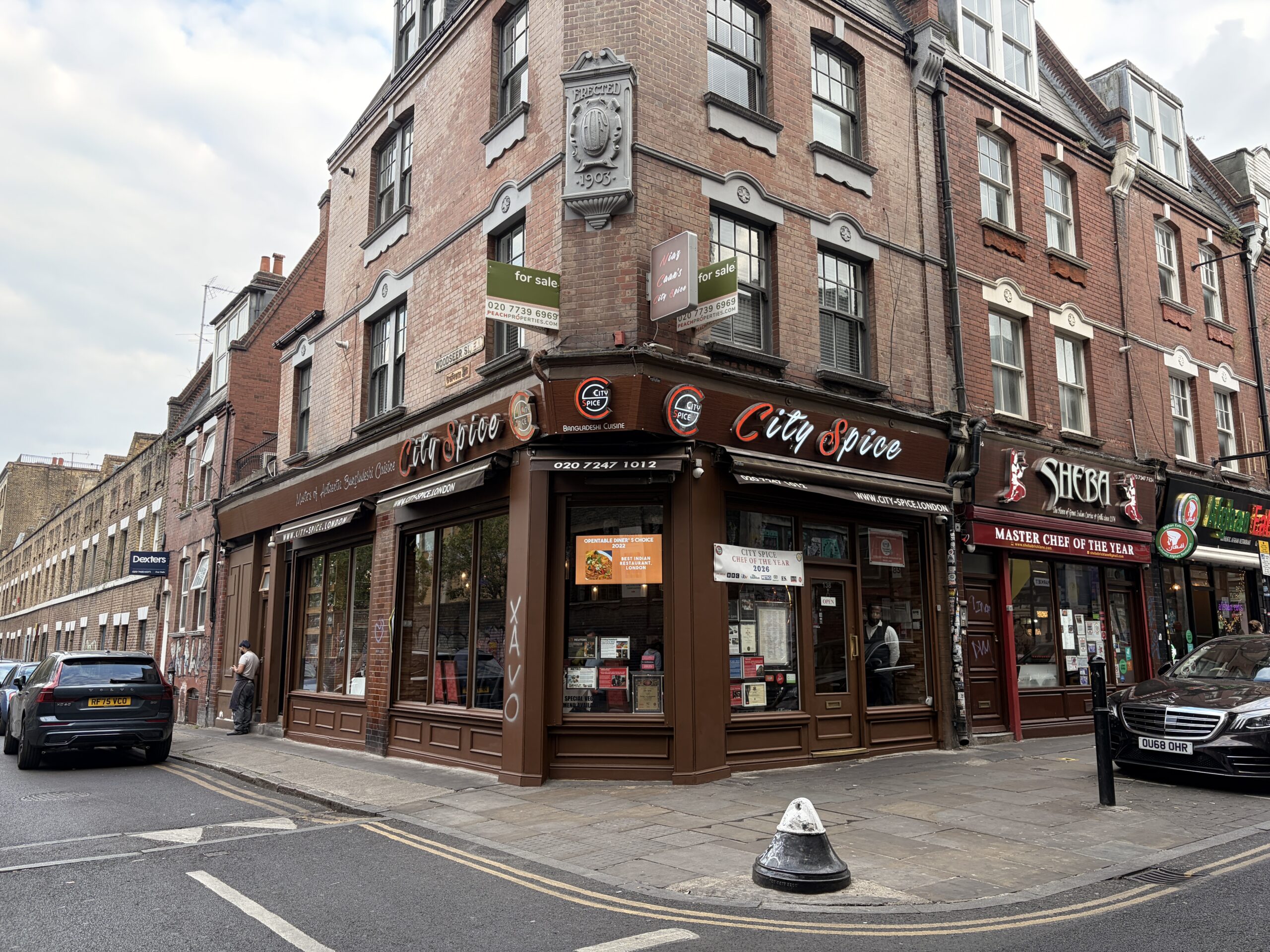
Ordering at an Indian restaurant in Brick Lane is more rewarding when you know the stories behind the dishes: Parsi sweet-sour sauces, the onions of a dopiaza, the Sylheti citrus in a shatkora. Try one familiar curry and one new one, and you will understand the street far better. We would be glad to cook both for you at City Spice, 138 Brick Lane.