
Exploring the Signature Dishes That Crown the Best Indian Restaurant Brick Lane London
The best Indian restaurant Brick Lane London offers is defined by a handful of signature dishes cooked properly: a slow, dark bhuna, a Bengali-style fish curry, smoky tandoor grills (vegetables included), a dhal with a fresh tadka, a well-layered biryani and a serious vegan plate. If a kitchen nails those, it can cook.
A signature dish isn’t just the thing a restaurant sells most. It’s the dish that shows what the kitchen believes in. Below is how we think about each one from behind the stove, what separates a good version from a tired one, and what you should taste for when you order.
What makes a signature dish at the best Indian restaurant Brick Lane London?
Bestsellers are often the safest items on a menu: mild, creamy, familiar. They pay the bills. A signature is different. It carries the identity of the cook, often a regional technique that takes time and judgement to get right. On Brick Lane, where most kitchens have Bengali and Sylheti roots, signatures tend to show that heritage: mustard, panch phoron, fish, slow-fried meat and a lot of vegetables.
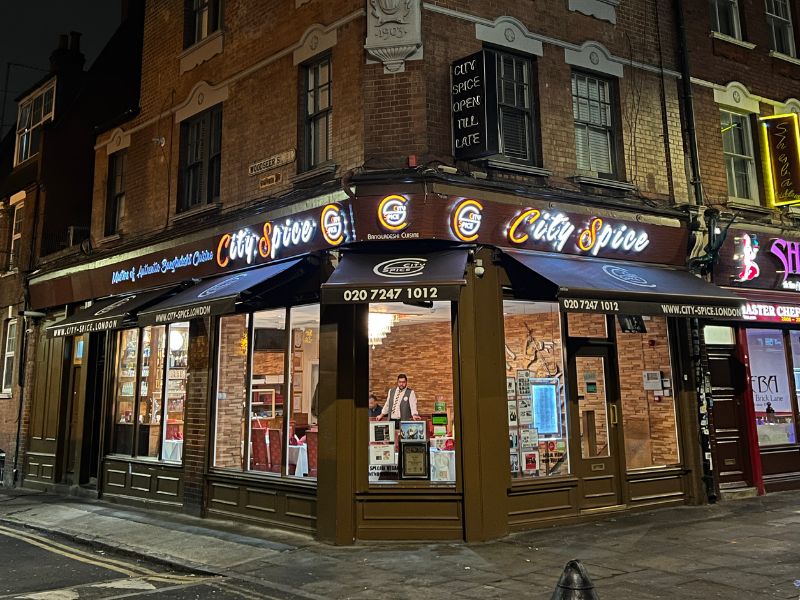
At City Spice, Chef Niaz’s cooking has a Bengali twist, so our sense of a signature is shaped by that. But the tests below apply to any Indian restaurant Brick Lane visitors are weighing up.
The slow bhuna: why does colour matter so much?
A bhuna is a technique before it is a dish. “Bhuna” means to fry, and the method is to cook spices, onions and meat in fat over steady heat, stirring and scraping, until the moisture is driven off and the oil separates from the masala. That process takes time. Onions alone need 15 to 20 minutes to turn deep golden. Then the ground spices go in and fry for a few minutes until they smell toasted rather than raw.
What you get on the plate should be dark, thick and clinging, with almost no loose sauce. The Bengali cousin, kosha mangsho, pushes this even further, with mutton fried down for an hour or more until it’s nearly black at the edges. If a “bhuna” arrives bright orange and soupy, the step that gives it its name has been skipped.
Taste for: caramelised depth, a gentle bitterness from well-browned onion, and meat that holds together but gives easily.
Why is fish the real test of a Bengali kitchen?
Bengal is a land of rivers, and fish sits at the centre of its cooking. A Bengali-style fish curry is usually lighter than a meat curry and built on mustard (shorshe), on a thin turmeric and cumin broth (jhol), or on a richer onion and tomato base.
Fish is unforgiving. Firm white fish cooks through in about 6 to 8 minutes once it hits a simmering sauce; any longer and it flakes apart. Good kitchens fry the pieces briefly first, often rubbed with turmeric and salt, which firms the surface and stops them breaking. Mustard sauces are added late because the pungency fades with prolonged heat.
Taste for: fish that holds in clean pieces, a sauce that tastes of the spice rather than of oil, and mustard heat that rises through your nose rather than burning your tongue.
How do tandoor grills show the kitchen’s skill?
A clay tandoor reaches 400°C or more near the walls, which is why tandoori food chars on the outside and stays juicy inside. For meat, the marinade does a lot of the work. Yoghurt’s mild acidity and its enzymes soften the surface proteins, and the milk solids brown quickly in the heat, giving that blistered, slightly smoky crust. Most kitchens marinate chicken for at least 4 hours and often overnight.
We also put vegetables in the tandoor, and that’s where you learn a lot about a kitchen. Paneer, peppers, onions, cauliflower and mushrooms all respond well to that dry blast of heat. The edges catch, the sugars concentrate, and you get smoke without any frying.
Taste for: charred edges with a moist centre, a marinade that has penetrated (not just coated), and no sour, raw-yoghurt taste.
Dhal and biryani: why are the humble dishes so revealing?
Start with dhal. Lentils are simmered until soft, then finished with a tadka: whole spices, garlic and chilli sizzled in hot fat and poured over at the last moment. That final step matters because many aroma compounds in cumin, mustard seed and garlic are fat-soluble and volatile. Bloom them in hot fat at the end and they stay bright. Cook them in from the start and they go flat.
Our aubergine dhal on the vegan menu is a good example of how a dhal can carry more than lentils. Aubergine, cooked until it collapses, adds a silky body and a faint smokiness.
Taste for: a pourable, glossy texture, a clear hit of tempered spice, and enough salt and acidity to keep it lively.
Biryani is the other quiet test, and done properly it is both a signature and a crowd-pleaser. The classic method layers partly cooked rice over a spiced meat or vegetable base, seals the pot and finishes it slowly on low heat (dum), so the steam carries aroma from the bottom layer into the rice. Basmati should be rinsed, soaked for about 30 minutes and par-boiled to around 70 per cent before layering, so it finishes in the steam without breaking.
The giveaway is the rice. Each grain should be long and separate, some stained with saffron or spice, some white. If it’s one uniform colour, it was probably stir-fried with sauce rather than layered and steamed.
Which vegan dishes deserve signature status?
For a long time, vegans on Brick Lane were offered a mixed vegetable curry and a side of chana. That has changed, and we’re proud of our part in it. Chef Niaz worked with Michelin-inspired chef Rupert Rowley to build a dedicated vegan curry menu at City Spice, treating plant dishes as signatures in their own right. It includes:
- Chowle Achar, best explained by the team at the table.
- Aubergine dhal, the silky, smoky pairing described above.
- Shobji Kufta Bhujon, built around vegetable kofta.
- Shahi Sahakari platter, a thali-style spread that lets you taste several dishes at once.
The thali format is the best way in if you’re unsure. It gives you a range of textures and heat levels in one sitting, which is exactly how Bengali home meals are eaten: several small dishes, rice in the centre, each eaten in a loose order from light to rich.
Where do these dishes fit in the hunt for the best curry in London?
Any ranking of the best curry in London is personal, and we’d be wary of anyone who claims to have settled it. What we’d say is that the argument should be about cooking, not marketing. A kitchen that can turn out a properly fried bhuna, a delicate mustard fish, a charred tandoor plate, a bright dhal and a vegan dish that stands on its own is a kitchen that has earned its place in that conversation. That is the standard we hold ourselves to as we work towards being the best Indian restaurant Brick Lane London diners return to.
Key Takeaways
- Signature dishes reveal a kitchen’s technique and heritage; bestsellers often don’t.
- A real bhuna is dark and clinging because the masala is fried until the oil separates.
- Fish, dhal and biryani are the quiet tests: timing, tempering and rice texture tell you everything.
- Tandoor-cooked vegetables and a dedicated vegan menu show a kitchen that takes plants seriously.
- The best Indian restaurant Brick Lane London has is the one that cooks each of these with care.
Frequently Asked Questions
What is the most traditional dish to order on Brick Lane?
Look for Bengali dishes such as a mustard fish curry, a slow-fried meat curry like kosha mangsho, or a dhal finished with panch phoron. These reflect the Sylheti and Bengali roots of most Brick Lane kitchens more closely than the standard curry house menu.
What is the difference between a bhuna and a curry?
Bhuna is a cooking method: spices, onions and meat are fried down until the oil separates and the sauce becomes thick and clinging. Many other curries are simmered in more liquid, so they are lighter and saucier.
Why does tandoori food taste smoky?
A tandoor runs at very high temperatures, so marinades and fat drip onto the hot coals or clay and vaporise, and the surface of the food chars quickly. Yoghurt in the marinade also browns fast, adding to the toasted, smoky flavour.
Does City Spice have vegan signature dishes?
Yes. City Spice has a dedicated vegan curry menu created by Chef Niaz with Rupert Rowley, including Chowle Achar, aubergine dhal, Shobji Kufta Bhujon and the Shahi Sahakari platter.
How can I tell if biryani is made properly?
Check the rice. Properly layered and steamed biryani has long, separate grains in mixed colours, while a uniform colour and sticky texture usually mean the rice was stir-fried with sauce.
Final Thoughts
Signature dishes are a kitchen’s handwriting. Read them closely and you’ll know what any restaurant on the street is really about. Our aim is simple: cook every one of these the slow, correct way, so that when people go looking for the best Indian restaurant Brick Lane London has, our plates make the case for us. Come and taste them at City Spice, 138 Brick Lane, and ask the team which one to start with.