
How Chefs Create Deep Flavor in Brick Lane Best Curry Dishes
Deep flavour in a Brick Lane best curry comes from layering, not from adding more spice. Chefs bloom whole spices in hot oil, brown onions slowly, fry ground spices until the raw edge disappears, reduce the sauce until oil separates, and finish with fresh aromatics. Each stage adds a different kind of flavour the others cannot.
People often ask us what the secret is. There isn’t one. There are about six small ones, done in the right order, with patience. Here is how they work and why.
Why does the order you add spices matter?
Spices are not all the same kind of ingredient. Whole seeds and bark (cumin, cardamom, cinnamon, cloves, bay) hold their aromatic oils locked inside. Ground spices have already released most of theirs and burn quickly. Fresh herbs lose their perfume within minutes of heat.
So the order follows the chemistry. Most of the flavour compounds in spices are fat-soluble, which means they dissolve into oil far better than into water. That is why almost every curry begins with whole spices dropped into hot oil, a step cooks call blooming or tempering. In 20 to 40 seconds the seeds crackle, darken slightly and perfume the oil. Everything that goes into the pan afterwards gets coated in that flavoured fat.
Too cool, and the spices stew without releasing much. Too hot, and cumin turns bitter in seconds. Cooks watch for the crackle and the change in smell, not the clock.
How long should onions really cook?
Longer than most home recipes say. This single step is the biggest difference between a thin curry and a deep one.
Sliced or chopped onions go through clear stages. After 5 minutes they soften and turn translucent. By 15 they are golden and sweet. Between 25 and 40 minutes, on a moderate heat with regular stirring, they turn a deep chestnut brown. That colour comes from caramelisation of the onion’s sugars and the Maillard reaction between sugars and amino acids, which produces hundreds of new savoury, roasted flavour compounds.
Rush it on high heat and the outside burns while the inside stays raw and sharp. A splash of water when the pan starts to catch lifts the browned bits back into the onions and lets you keep going. In our kitchen, nobody touches the heat dial on the onion pan to save time.
What does “bhuna” actually do to a curry?
Once the onions are brown, ginger and garlic paste goes in and cooks until the raw, pungent smell turns mellow, usually a few minutes. Then the ground spices: turmeric, chilli, coriander, cumin. These need a little water so they fry without scorching.
This is the bhuna stage. The cook stirs, scrapes and adds tiny splashes of water, letting it evaporate, again and again. It can take 10 to 15 minutes. Raw ground coriander tastes dusty and green; properly fried, it turns nutty and warm. Turmeric loses its earthy, slightly medicinal edge.
You know it is done when the oil separates and pools at the edge of the masala. That is the moment the water has cooked off and the spices are frying in fat. Skip it, and the curry will taste raw no matter how long it simmers afterwards.
The flavour layers, stage by stage
Here is the order we follow for a classic slow-cooked lamb curry. Quantities serve four.
- Bloom: 3 tbsp oil over medium heat. Add 1 tsp cumin seeds, 4 green cardamom pods, 1 small cinnamon stick, 2 bay leaves. Cook 30 seconds until crackling.
- Brown: Add 3 medium onions, finely sliced. Cook 30 to 35 minutes, stirring, until deep brown.
- Aromatics: Add 1 tbsp each of ginger and garlic paste. Fry 3 minutes.
- Bhuna: Add 1 tsp turmeric, 1 tsp Kashmiri chilli, 2 tsp ground coriander, 1 tsp ground cumin with a splash of water. Fry, adding small splashes, until oil separates (10 to 12 minutes).
- Body: Add 800g diced lamb shoulder and sear in the masala 5 minutes. Add 2 chopped tomatoes and cook until they collapse.
- Simmer: Add 300ml hot water and 1 tsp salt. Cover and cook gently for 75 to 90 minutes until the lamb is tender.
- Finish: Stir in 1 tsp garam masala and a handful of chopped coriander. Rest 10 minutes off the heat.
Resting matters. As the curry cools slightly, the sauce thickens and the flavours settle. Most curries taste even better the next day for the same reason.
How does a tarka add a final layer?
A tarka (also called tadka or chhonk) is a second tempering, poured over a finished dish. Hot oil or ghee, then whole spices, sliced garlic, dried chillies or curry leaves, fried for under a minute and tipped over the top.
It is the reason a good dhal tastes so alive. The base flavours have mellowed during cooking; the tarka brings back sharp, fresh, roasted notes right at the end. Bengali cooks often use panch phoron here, the five-seed blend of fenugreek, nigella, cumin, black mustard and fennel, sometimes in mustard oil. Chef Niaz’s cooking carries a Bengali twist, so you will taste that seed-popping finish across many of our dishes.
Can vegan curries be just as deep?
Absolutely, and in some ways they demand more skill. Without meat stock or the richness of dairy, every layer has to work harder.
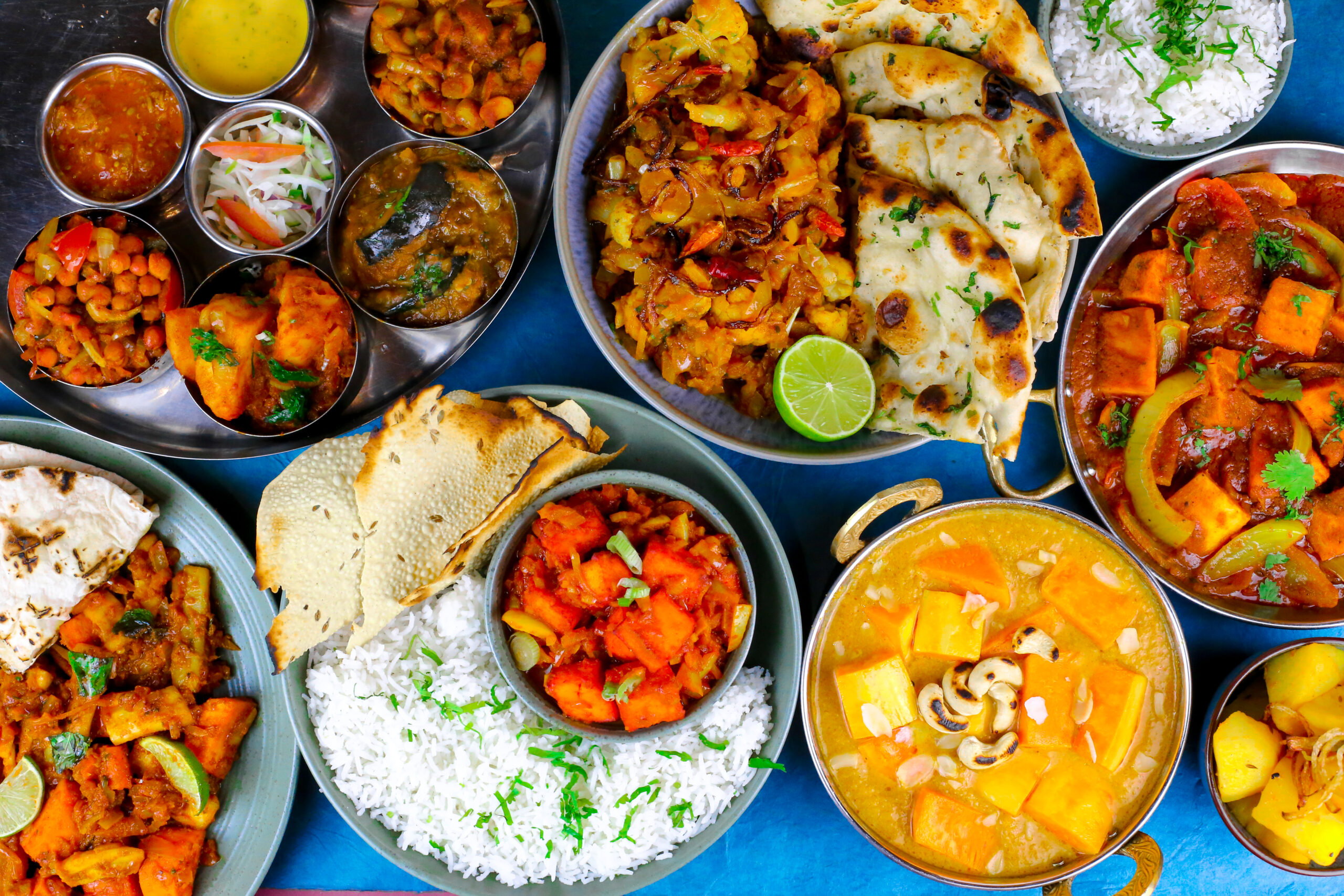
Vegan cooks build body with slowly browned onions, tomatoes reduced until jammy, coconut, lentils cooked down until creamy, and vegetables roasted for char. At City Spice we use the tandoor for vegetables as well as meat, and that smoky caramelisation adds a dimension no pan can match.
When guests ask us about a vegan Indian restaurant London cooks would respect, we point to our dedicated vegan curry menu. Michelin-inspired chef Rupert Rowley worked with Chef Niaz to create it: Chowle Achar, aubergine dhal, Shobji Kufta Bhujon and the thali-style Shahi Sahakari platter. The aubergine dhal shows the principle perfectly. Smoky, slow-cooked aubergine gives the lentils a meaty depth without any meat.
What should you look for in a Brick Lane best curry?
When you sit down at what you hope is the best curry house in Brick Lane, taste with these stages in mind:
- Does the sauce taste toasted and rounded, or dusty? Dusty means the bhuna was rushed.
- Is there sweetness underneath the spice? That is properly browned onion.
- Is there a fresh top note? Garam masala, herbs or a tarka added at the end.
- Does the oil separate slightly at the rim? A sign of proper reduction, not a sign of greasiness.
A Brick Lane best curry should taste like it took time, because it did.
Frequently Asked Questions
Why does my homemade curry taste flat?
Usually the onions were not browned long enough or the ground spices were not fried until the oil separated. Both steps take patience but make the biggest difference.
When should garam masala be added?
Add it near the end of cooking. Its aromatic oils fade with long heat, so adding it late keeps its warm, sweet fragrance.
What is the difference between tarka and tempering?
They are the same technique. Tempering at the start flavours the cooking oil; a tarka at the end is poured over a finished dish for a fresh top note.
Do curries taste better the next day?
Many do. Resting lets the sauce thicken and the spice flavours settle and blend, although fresh herbs are best added just before serving.
Is Bengali curry different from North Indian curry?
Bengali cooking often uses mustard oil, panch phoron and fresh green chilli, giving lighter, more pungent flavours. North Indian curries lean more on cream, garam masala and slow-cooked onion gravies.
Final Thoughts
The Brick Lane best curry dishes are not built on a secret ingredient. They are built on order, heat control and time, the same steps you can practise at home. If you would rather taste them done by a kitchen that cooks this way every night, come and see us at City Spice on Brick Lane.