
What Makes the Dining Aesthetic Unique Across Indian Restaurants Shoreditch
Three things set the look of Indian restaurants Shoreditch apart: old industrial buildings that leave brick and timber on show, tableware that does a real job (steel thalis, copper handis, sizzling iron plates), and food plated for sharing in the middle of the table. The aesthetic comes from function and history, not from a designer’s mood board.
That is our view from the kitchen on Brick Lane, where Shoreditch blurs into Banglatown. Looks matter. But in Indian cooking, almost every visual choice started as a practical one.
Why Do Indian Restaurants Shoreditch Locals Love Look So Different From The Old Curry House?
Picture the classic British curry house of the 1970s and 1980s. Flock wallpaper, deep reds and golds, brass lamps, white tablecloths, carpets that absorbed a thousand conversations. That look was aspirational. It borrowed from smart hotel dining rooms of the time to tell British customers that this was a proper night out, not a café.
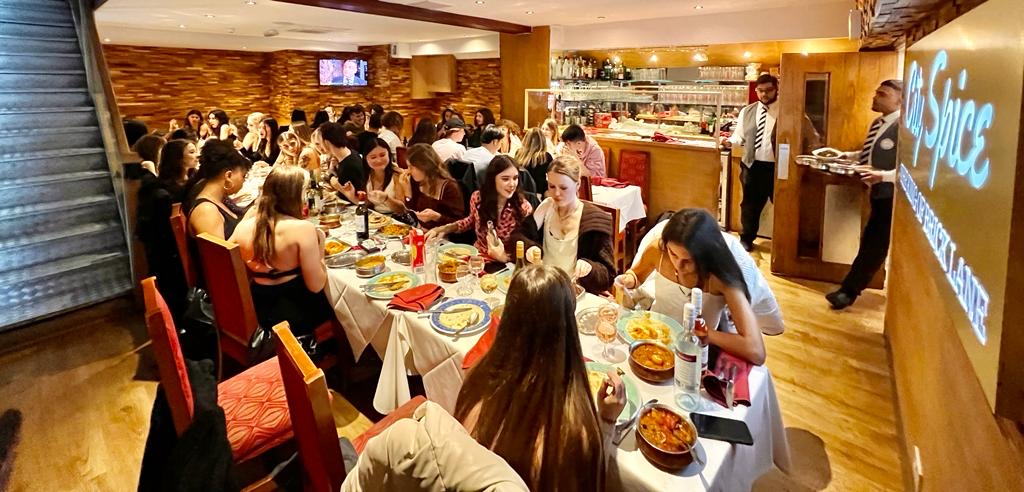
Shoreditch had different raw materials. Much of the area was warehouses, furniture workshops and small factories. When restaurants moved into those spaces, the bones stayed: bare brick, iron columns, big windows, scrubbed floors. Hard surfaces and high ceilings make a room louder and brighter, and that energy became part of the appeal.
Neither style is better. Here is how they compare.
| Feature | Classic curry house | Shoreditch-style room | Family-run Brick Lane room
|
|---|---|---|---|
| Walls and light | Patterned wallpaper, warm low light | Bare brick, industrial fittings, daylight | Varies; often simple, bright and practical |
| Tableware | White china, metal serving dishes on warmers | Mixed: steel thalis, handmade bowls, iron sizzlers | Generous bowls for sharing, steel and copper |
| How food arrives | Course by course | Small plates as they are ready | Dishes brought together for the table |
| Sound | Quiet, soft furnishings | Lively, echoing | Conversational, family pace |
| What it signals | A special night out | A casual, social meal | Being looked after |
What Does The Tableware Tell You About The Kitchen?
More than you would think. Each traditional vessel exists for a reason.
The steel thali. A large round tray with small bowls, called katoris, sitting on it. Wet dishes such as dhal and curry stay in their katoris; rice, bread and dry vegetables sit on the tray. You mix as you eat, so every mouthful is a different combination. Stainless steel is also non-reactive, so it will not pick up a metallic taste from sour tamarind or lime.
The copper or brass handi. A narrow-necked pot used to carry curries to the table. The narrow top loses less heat and steam than an open bowl, so a biryani or curry stays hot and moist while the table passes it around. Serving handis are usually lined with steel or tin, because acidic food reacting with bare copper is a bad idea.
The cast-iron sizzler. A heavy plate heated on the stove until it is fiercely hot, then loaded with grilled meat or vegetables over sliced onions. Iron holds heat for a long time, which is why the plate is still crackling when it lands. Sizzler plates were popularised in Mumbai restaurants in the 1960s and have been a showpiece ever since.
The bread basket. A naan dropped onto a flat plate traps its own steam underneath, and the base turns soft within a couple of minutes. A basket or a rack lets the steam escape so the crust stays crisp longer. Small detail, big difference.
Why Is So Much Indian Food Served To Share?
Across South Asia, a meal is traditionally a table of dishes rather than one plate per person. That habit suits the Shoreditch crowd, who often eat in groups and like to try everything.
From the kitchen side, sharing changes how we cook. A dish that will sit in the middle of the table for twenty minutes needs to hold. So we think about sauces that thicken slightly as they cool rather than splitting, and about grills that stay juicy off the heat. Rested meat matters here: a few minutes off the coals lets the juices settle back into the fibres instead of running onto the plate.
One rich dish, one sour, one green, one charred from the tandoor, rice and bread. The table becomes the plate.
What Gives Indian Food Its Colours, And Does It Matter?
Colour on an Indian plate is mostly flavour you can see.
- Yellow comes from turmeric, which is fat-soluble. It is fried briefly in oil at the start of cooking to release its colour and lose its raw, dusty taste.
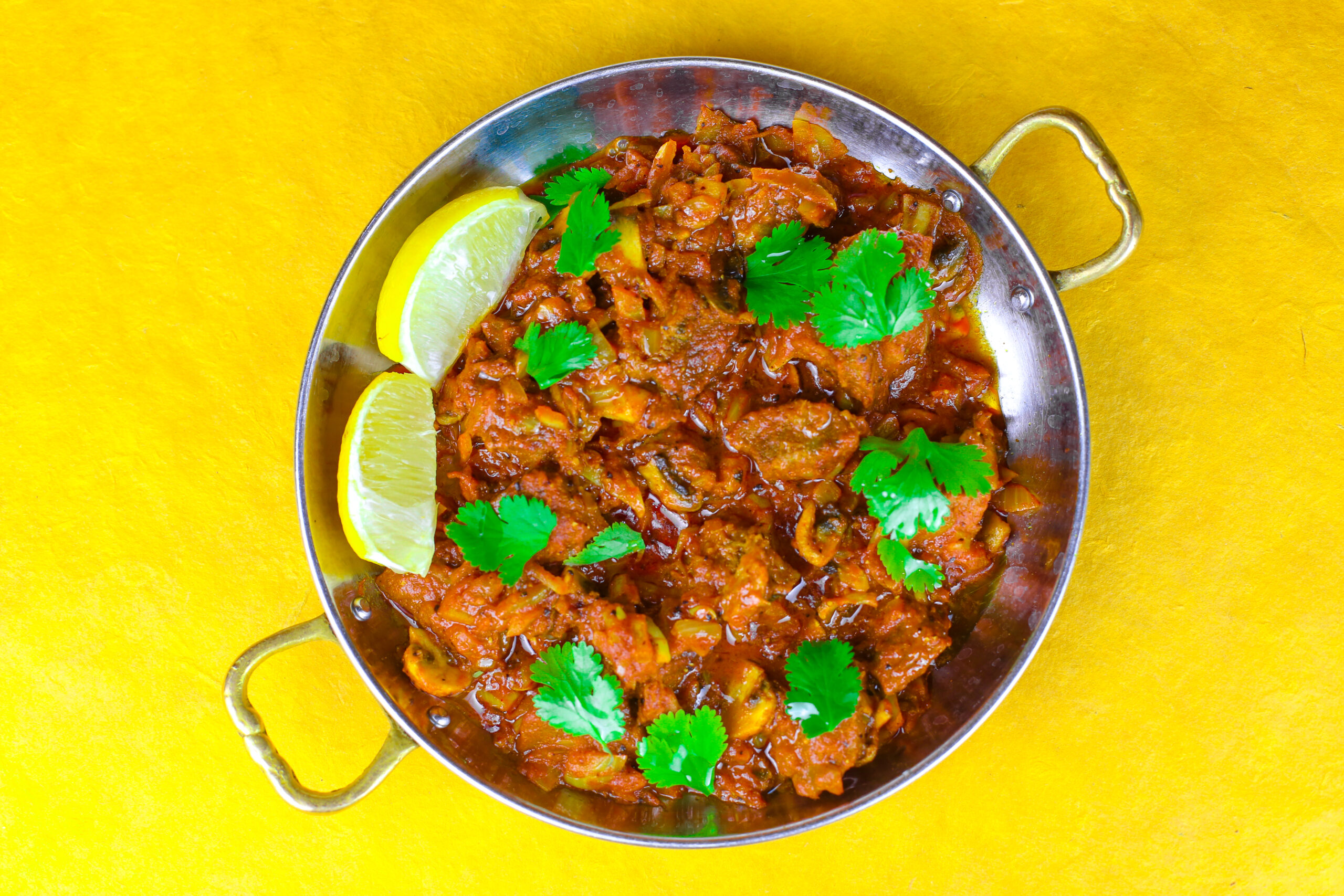
- Red often comes from Kashmiri chilli, which gives a deep colour but relatively gentle heat. A bright red curry is not always a hot one.
- Deep brown is the colour of patience. In Bengali cooking, a kosha (slow-fried) dish is stirred over steady heat until the onions, spices and meat darken and the oil separates. That browning, the Maillard reaction, builds savoury depth no shortcut can match.
- Green comes from fresh coriander, mint and green chilli, added late because their colour and aroma fade with heat.
Chef Niaz’s cooking has a Bengali twist, so our plates often lean towards those browns, mustard yellows and fresh greens rather than the uniform orange of a single base gravy. When dishes on a table all look the same colour, they often taste the same too.
Does An Open Tandoor Change The Experience?
Yes, and it is one of the most theatrical parts of the dining aesthetic. A tandoor runs far hotter than a domestic oven, and you can hear it: the slap of naan dough on the clay wall, the hiss of marinade dripping onto coals. The smell of charring travels.
We use our tandoor for vegetables as well as meat, so the smoky edge reaches the plant-based side of the menu too. Some Indian restaurants Shoreditch diners visit put the tandoor on show behind glass; others keep it in the back. Either way, char on the edges of a kebab or a blistered naan is the visual proof that it was cooked properly hot.
How Do Vegan Dishes Fit Into The Shoreditch Look?
A vegan plate used to be two side dishes pushed together. Now diners expect the same care as everyone else.
At City Spice, Michelin-inspired chef Rupert Rowley worked with Chef Niaz to build a dedicated vegan curry menu. It includes Chowle Achar, an aubergine dhal, Shobji Kufta Bhujon and the Shahi Sahakari platter, which is served thali-style so a vegan guest gets a full, composed spread rather than a compromise. If you are searching for a vegan Indian restaurant London can be proud of, that sense of a complete plate is the thing to look for.
What Makes A Room Feel Right For A Curry Night?
Beyond the bricks and the tableware, the best rooms get three things right.
- Light you can see the food by. Too dim and the colours we worked for disappear.
- A pace that matches the meal. Grills hot from the tandoor, curries that follow, bread arriving while it is still crisp.
- People who know the food. In a family-run kitchen, the staff can tell you what is in a dish and how hot it really is.
That last point is what people usually mean when they talk about the best curry house in Brick Lane. Not the décor, but feeling looked after.
Frequently Asked Questions
Why do Indian restaurants serve food in copper pots?
Copper and brass handis are traditional serving vessels with narrow necks that help keep curries and biryanis hot and moist at the table. They are usually lined with steel or tin so acidic sauces do not react with the copper.
What is a thali?
A thali is a round tray, usually steel, holding several small bowls of different dishes alongside rice and bread. It lets one diner taste a balanced range of flavours, from rich and spicy to sour and fresh, in a single meal.
Why is my naan soggy underneath?
A hot naan releases steam, and on a flat plate that steam condenses under the bread and softens it within minutes. Serving bread in a basket or on a rack, and eating it promptly, keeps the crust crisp.
Are Indian restaurants in Shoreditch more casual than in central London?
Many are, partly because they occupy former warehouses and workshops and partly because local diners favour sharing plates and groups. That said, plenty of Shoreditch kitchens cook with as much care as any formal restaurant.
Does a red curry mean it will be very hot?
Not necessarily. Kashmiri chilli gives a deep red colour with fairly mild heat, so colour is a poor guide to spice.
Final Thoughts
The dining aesthetic across Indian restaurants Shoreditch is honest at heart: industrial rooms, working tableware and food made for sharing. We think the most beautiful thing on any table is a dish cooked properly and served while it is at its best. Come to City Spice on Brick Lane, sit down with friends, and let the table fill up.