
How East London’s Creative Vibe Shapes Indian Restaurants in Shoreditch
East London’s creative culture pushes Indian restaurants in Shoreditch towards sharing plates, bolder regional cooking, seasonal British vegetables treated with Indian technique, and menus that welcome vegans as first-class guests. Diners here expect food with a point of view. The best kitchens answer with tradition, cooked confidently, rather than gimmicks.
What makes the Shoreditch and Brick Lane food scene different?
Walk north up Brick Lane from Whitechapel and the street changes character every few hundred metres. The southern end is the heart of Banglatown, lined with curry houses and Bangladeshi grocers. Past the Old Truman Brewery, which stopped brewing in 1989 and is now a sprawl of markets, studios and event spaces, you drift into Shoreditch proper: galleries, vintage shops, design studios and walls painted over so often that the street art becomes a record of the neighbourhood’s moods.
That mix matters to anyone running a kitchen here. Our neighbours are illustrators, musicians, coders, market traders and families who have lived in the area for three generations. They eat out often, they talk about food in detail, and they notice when something is cooked with care.
So the pressure on Indian restaurants in Shoreditch is not to be trendy. It is to be interesting and honest at the same time.
How does a creative crowd change what diners order?
The biggest shift we see at the pass is how people order. A creative-industry lunch or a group of friends on a Thursday night rarely wants one main course each. They want to try six things and argue about which was best.
That suits Indian food perfectly, because the cuisine was always built for sharing. A Bengali home meal is a sequence of small dishes eaten with rice: something gently bitter, a dhal, a vegetable, a fish or meat curry, a chutney, something sweet. Restaurants that lean into that format, rather than the old one-curry-one-rice model, feel right in this neighbourhood.
It also changes how a kitchen thinks about balance. When a table orders across the menu, the cooks have to make sure the dishes contrast rather than repeat. Two creamy sauces next to each other blur together. One creamy dish, one sharp tamarind dish and one dry, charred plate from the tandoor make each other taste better.
How do chefs build a sharing menu that works?
Here is the process we use when we think about dishes that arrive together. It is a useful checklist for ordering, too.
- Start with texture. Pick at least one crisp element (bhaji, pakora, poppadom) and one soft one (dhal, a slow-cooked curry).
- Add a dry dish. Something from the tandoor or a dry bhuna gives the table a break from sauce.
- Choose one rich and one sharp. Richness from coconut, nuts or slow-cooked onion. Sharpness from tamarind, lime or pickle spices.
- Include a green vegetable. Spinach, beans or greens tempered with garlic and chilli refresh the palate.
- Use rice and bread as the bridge. Plain basmati carries every sauce; bread is better for thick, clinging dishes.
- Finish with something cooling. Raita for those who eat dairy, a fresh salad or pickle-sharp onions for those who do not.
A table that follows this rough shape eats more varied food, wastes less and leaves talking about the meal rather than feeling flattened by it.
Why are seasonal British vegetables appearing on Indian menus?
East London has a strong habit of caring where food comes from, and that has filtered into Indian kitchens. The interesting part is that Indian techniques suit British produce remarkably well.
A few examples of how the logic works:
- Cauliflower and broccoli love the tandoor. Their dense florets hold a thick marinade, and the intense heat (often above 400°C inside the oven) chars the edges in minutes while the centre steams tender.
- Root vegetables such as squash, carrot and sweet potato have natural sugars that caramelise when roasted with whole cumin and fennel, which bring out their sweetness without adding sugar.
- Brassicas and winter greens respond to a tarka, a quick burst of hot oil with garlic, dried chilli and mustard seed poured over at the end. The hot fat carries fat-soluble aroma compounds across the leaves in seconds.
- Aubergine, the backbone of so many Bengali dishes, absorbs spiced oil like a sponge. Salting it for 20 minutes first draws out moisture so it fries rather than steams.
At City Spice, Chef Niaz’s cooking carries a Bengali twist, and Bengali home cooking has always been vegetable-led. The tandoor here is used for vegetables as well as meat, which fits naturally with what this neighbourhood wants to eat.
Has the vegan movement changed Indian restaurants in Shoreditch?
Yes. Shoreditch and neighbouring Hackney are full of vegan cafés and plant-based diners, and Indian kitchens have had to respond properly rather than offering a vegetable curry and hoping.
At City Spice, Michelin-inspired chef Rupert Rowley worked with Chef Niaz to create a dedicated vegan curry menu. It includes Chowle Achar, an aubergine dhal, Shobji Kufta Bhujon and the thali-style Shahi Sahakari platter. Building a menu without dairy from the start means the richness, tang and body of each dish come from plant ingredients by design: coconut, lentils, slow-cooked onion, tamarind and careful tempering.
That design-first thinking is very East London. It treats a dietary choice as a creative brief rather than a restriction.
Is an Indian Restaurant in Brick Lane different from one in Shoreditch?
Geographically, the line is blurry. Brick Lane runs up into Shoreditch, and many people use the names loosely. An Indian Restaurant in Brick Lane sits in a long tradition of Bangladeshi-run curry houses that shaped how Britain eats. Shoreditch brings a younger, design-conscious crowd that wants to know the story behind a dish.
The most rewarding places combine both. They keep the hospitality and generosity of the old curry house while cooking with the curiosity Shoreditch expects. Diners looking for the best curry on Brick Lane are increasingly asking for that combination: a proper, well-made curry, plus something on the menu they have not seen before.
From inside our kitchen, we think the creative influence works best when it sharpens tradition rather than replacing it. A street-art mural does not erase the brick wall underneath. It gives you a reason to look at it again.
Frequently Asked Questions
Is Brick Lane part of Shoreditch?
Brick Lane runs north from Whitechapel towards Shoreditch, and its northern end blends into the Shoreditch area. The southern stretch is widely known as Banglatown, home to many Bangladeshi-run restaurants.
What is a tarka?
A tarka (also called tadka or chhaunk) is a tempering of whole spices, garlic or chilli fried in hot oil or ghee and poured over a finished dish. It adds a fresh layer of aroma just before serving.
How should a group order at an Indian restaurant?
Order a mix of textures and styles rather than one curry each. Combine a crisp starter, a dry tandoor dish, one rich and one sharp curry, a vegetable, rice and bread.
Do Shoreditch Indian kitchens cater for vegans?
Many do, and some go further with dedicated vegan menus. City Spice on Brick Lane has a vegan curry menu created by Chef Niaz with chef Rupert Rowley.
Why salt aubergine before cooking?
Salting draws out water from the aubergine’s spongy flesh. Less water means it fries and browns rather than steaming, and it absorbs less oil.
Final Thoughts
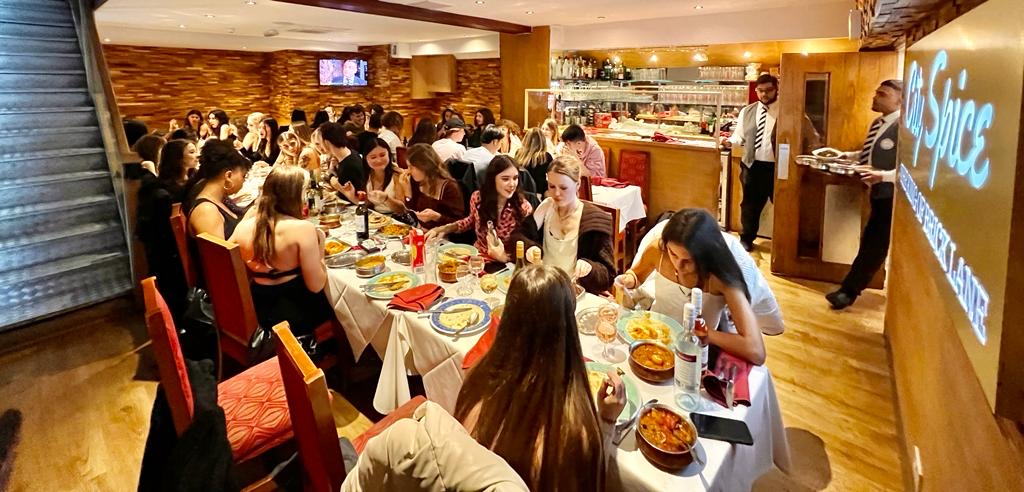
The creative energy of East London has been good for Indian restaurants in Shoreditch. It has encouraged sharing, made vegetables the star more often and given kitchens permission to cook regional dishes with confidence. At City Spice, 138 Brick Lane, we sit right where the curry-house tradition meets that curiosity, and we enjoy cooking for both. Come and share a table with us, order more dishes than you think you need, and see how the two worlds fit together.